

The key activity of upstream SCM is e-procurement.
What is e-procurement?
The term ‘procurement’ covers all the activities needed to obtain items from a supplier: the whole purchases cycle.
Electronic Procurement (also known as e-procurement) is the business-to business purchase and sale of supplies and services over the internet. It is a way of using the internet to make it easier, faster, and less expensive for businesses to purchase the goods and services they require.
The key activity of upstream SCM is e-procurement.
What is e-procurement?
The term ‘procurement’ covers all the activities needed to obtain items from a supplier: the whole purchases cycle.
Electronic Procurement (also known as e-procurement) is the business-to business purchase and sale of supplies and services over the internet. It is a way of using the internet to make it easier, faster, and less expensive for businesses to purchase the goods and services they require. While e-procurement is a general term that covers a wide assortment of techniques, its overall goal is to streamline the purchasing process in order to reduce costs, increase speed and allow managers to focus on other strategic matters.
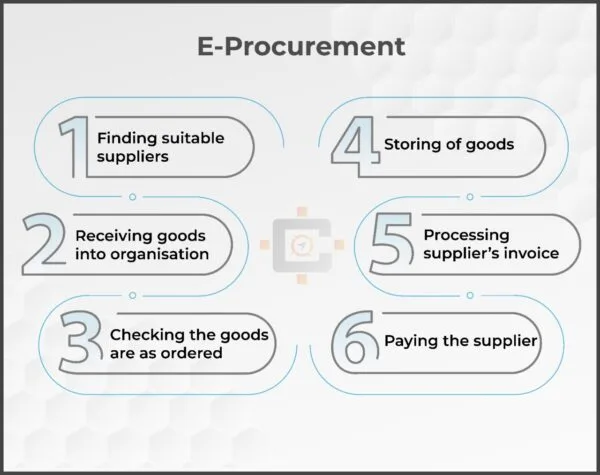
– Identifying when items are needed, how many are needed and gaining authority to acquire them.
– Finding suitable suppliers.
– Choosing which supplier to order from.
– Agreeing the price or perhaps a range of prices depending on volumes.
– Ordering the goods with the chosen supplier(s).
– Receiving goods into the organisation.
– Checking the goods are as ordered and handling queries.
– Recording the goods in inventory or the non-current asset register as appropriate.
– Storing of goods.
– Receiving, checking and processing the supplier’s invoice.
– Paying the supplier according to cash flow/cash discount priorities.
Many organisations have expanded e-procurement beyond production related procurement (which is directly related to the core activities of the organisation) into non-production procurement (which looks at ancillary services such as meeting administrative and distribution needs). For example, Kaplan have an e-procurement system that staff use for obtaining rail travel tickets for journeys to clients and meetings.
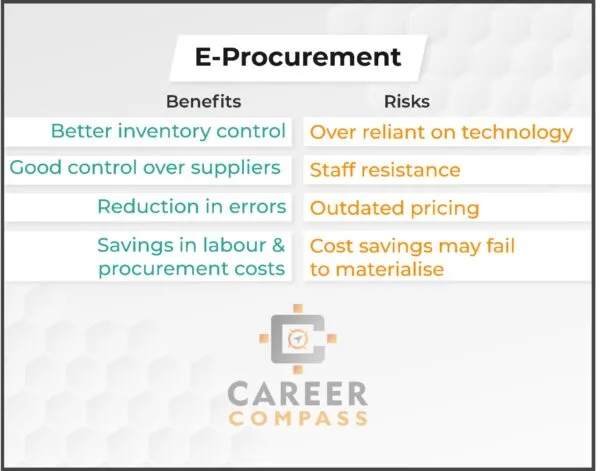
Benefits:
– Savings in labour and procurement costs
– Better inventory control
– Better control over suppliers (may even be able to influence their design and production)
– Reduction in errors
Risks:
– Become over reliant on the technology
– There may be staff resistance
– Cost savings may fail to materialise
– Prices may become out of date or uncompetitive


