

Downstream supply change management is about managing relationships with both customers and consumers, as well as any other intermediaries along the way.
Downstream supply change management is about managing relationships with both customers and consumers, as well as any other intermediaries along the way.
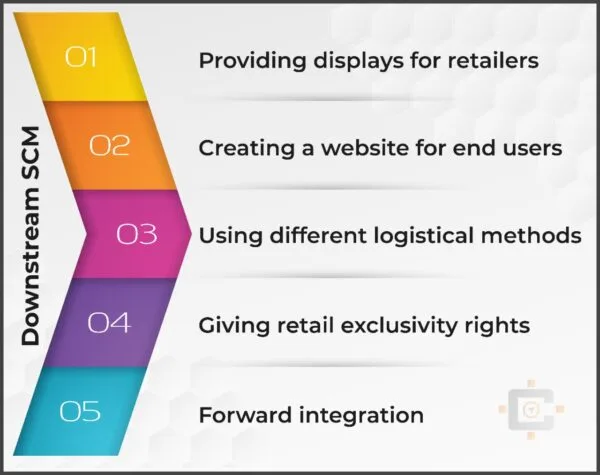
Examples of downstream supply chain management actions are:
– Providing displays for retailers
– Creating a website for end users
– Creating user forums on websites
– Determining which retailers and distributors to use
– Use of different logistical methods/providers
– Changes to finished goods inventory policies
– Setting recommended retail prices
– Giving retail exclusivity rights
– Forward integration.
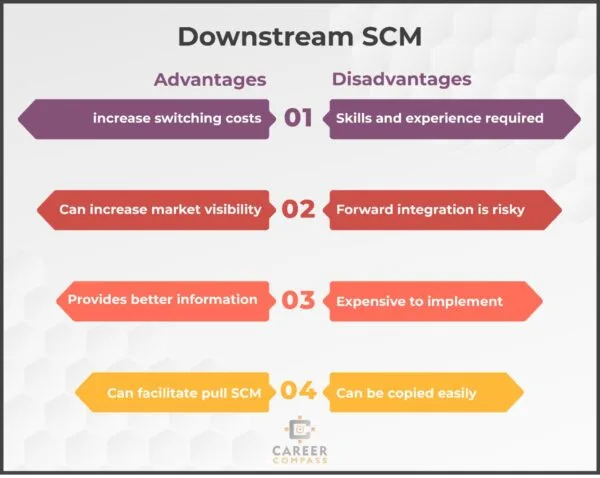
Advantages:
– Can tie in customers/increase switching costs
– Can improve customer loyalty and retention
– Can increase market visibility
– Provides better information on customer needs, tastes etc.
– Product failure rates can be reduced
– Can facilitate pull supply chain management
– More regular and better communication with customers (e.g.,can provide software/product updates etc.)
– Gives users a voice
Disadvantages:
– Can be expensive to implement
– As a differentiation strategy it is easily copied
– It relies on suppliers ‘willingness to adapt to customer needs (often needs corresponding upstream management)
– The organisation might become reactive rather than proactive to customer needs
– Forward integration can increase business risk and exit barriers
– Must ensure that forum/website users are representative of all users
– Requires skills and experience for the benefits to be fully realised
– There is a risk of loss of focus on core competences and activities
Dealing with intermediaries:
A typical downstream for a manufacturer might involve selling to distributors, who then sell on to retailers, who in turn sell on to end users. Distributors and retailers are therefore intermediaries between the manufacturer and the consumer of the product. One element of supply chain management is to manage intermediaries.
– E-commerce can lead to disintermediation. In this process intermediate organisations (middlemen) can be taken out of the supply chain.
– The process of reintermediation is also found,i.e., new intermediaries are introduced to the value chain, or at least to some aspects of it.
– Countermediation is where established firms create their own new intermediaries to compete with established intermediaries.
An example of disintermediation is evidenced in the travel industry, where travel agents have been cut out of many transactions as the public can book directly with hotels, airlines and rail companies.
The travel industry also gives an example of reintermediation. Companies like lastminute.com and expedia.com are like new travel agents, presenting a wide choice of products and services.
An example of countermediation is Opodo.com, set up by a collaboration of European airlines to encourage customers to book flights directly with them rather than using cost-comparison intermediaries such as lastminute.com.


