

Risk management is therefore the process of reducing the possibility of adverse consequences either by reducing the likelihood of an event or its impact, or taking advantage of the upside risk.
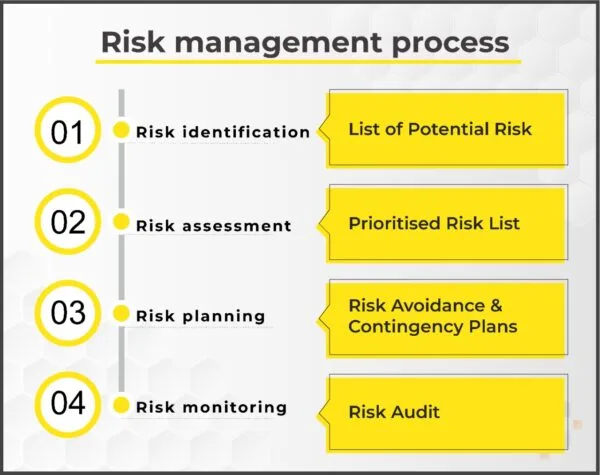
- Risk identification
- Risk assessment
- Risk planning
- Risk monitoring
– Risk management is therefore the process of reducing the possibility of adverse consequences either by reducing the likelihood of an event or its impact, or taking advantage of the upside risk.
– Management are responsible for establishing a risk management system in an organisation.
Risk management process:
Risk identification:Risks are identified by key stakeholders. Risks must obviously be identified before they can be managed.
Risk assessment:
Risks are evaluated according to the likelihood of occurrence and impact on the organisation. This assessment provides a prioritised risk list identifying those risks that need the most urgent attention.
Risk planning:
Planning involves establishing appropriate risk management policies. Policies include ceasing risky activities through to obtaining insurance against unfavourable events. Contingency planning involves establishing procedures to recover from adverse events, should they occur.
Risk monitoring:
Risks are monitored on an ongoing basis. Where risks change or new risks are identified then those risks are added to the risk assessment for appropriate categorisation and action.
This lesson is waiting for its secure Vimeo video.


