

Porter’s 5 forces model is there to assess the intensity of competition and attractiveness of any Industry.
Before entering into any business we have to assess, how much growth potential does the industry have.
It consist of 5 forces where we have to decide whether each force will against us or in favor to us. If majority forces can go against us then we should not go into that industry.
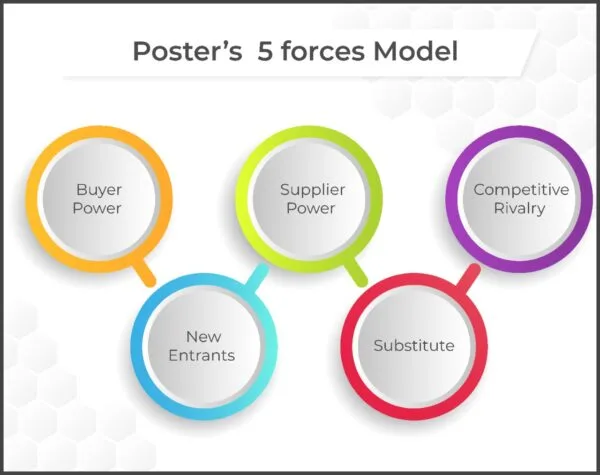
It will be helpful to check whether in any particular industry we can make above average profit or not.
Here we are assessing the overall attractiveness on the basis of below 5 forces:
1) Buyer Power = Powerful buyer can demand discounted price and extra services
2) Supplier Power = Powerful supplier can demand higher prices for their products
3) Competitive Rivalry = High level of competition can lead to price war and high expenditure on marketing
4) New Entrants = If there is no or very low barrier to entry then new entrant can come easily
5) Substitute = If organization has lots of substitute then they will have to keep the products price low
Sportswear Industry:
– Competitive Rivalry
4-5 companies & brands dominates the market (Nike, Adidas, Puma, Under Armor, Asics)
– Barrier to entry/ Threat of new entrants
These companies have invested millions of dollars to get Brand recognition around the world & they have benefit of economics of scale.
– Threat of substitute
We can say that sportswear have a very less chance of substitute.
– Bargaining power of supplier
It’s not high because the main material used while making sportswear is cotton and other types of fabrics and for all this there are lots of suppliers available.
– Bargaining power of buyer
Even if there are lots of buyers for sportswear but because of limited competition and high brand recognition the bargaining power is low.
By endorsing sports athletes, Nike influenced lots of customers and got their brand loyalty.
This lesson is waiting for its secure Vimeo video.


