

E-business (electronic business) is the conduct of business processes on the internet. It includes,
- Buying and selling goods online
- Serving customers
- Processing payments
- Sharing Information
- Production Contol
E-commerce is a subset of e-business. The most generic description of ecommerce is trading on the internet.
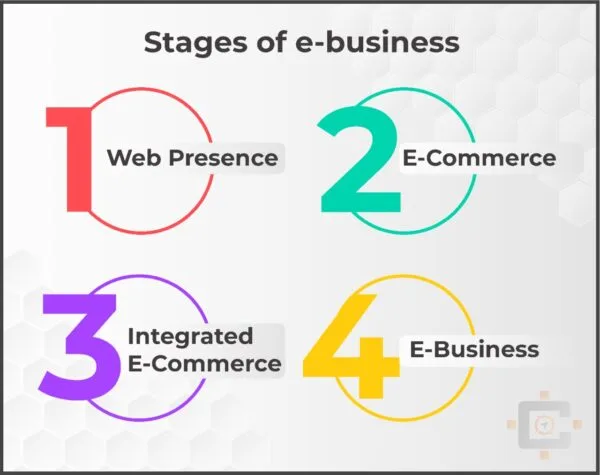
E-business (electronic business) is the conduct of business processes on the internet. These e-business processes include buying and selling goods and services, servicing customers, processing payments, managing production control, collaborating with business partners, sharing information, running automated employee services, recruiting; and more.
The transformation toward e-business is complex and in order for it to succeed, there is a need to balance between strategy, an adapted business model, right processes (sales, marketing) and technology (SCM, CRM).
E-commerce is a subset of e-business. The most generic description of ecommerce is trading on the internet, buying and selling products and services online.
The most notable e-business example is Amazon, which, as the world’s largest e-commerce marketplace and largest internet company based on revenue, has used its e-business model to disrupt numerous established industries, from publishing to supermarkets.
Uber and Lyft, both of which built businesses that match drivers with people needing rides, are other examples. Uber Eats, Uber’s food ordering and delivery platform launched in 2014, is an example of how an e-business can expand in the digital age.
Travel sites like Expedia, Travelocity and TripAdvisor that enable consumers to research, plan and book all or pieces of their trips based on personalized criteria, such as price, consumer ratings, locations and more, are other e-business model examples.
This lesson is waiting for its secure Vimeo video.


