

A body of theory and knowledge which is used to support the public interest.
A profession is distinguished by certain essential and defining characteristics:
Profession:
Definition:
A body of theory and knowledge which is used to support the public interest.
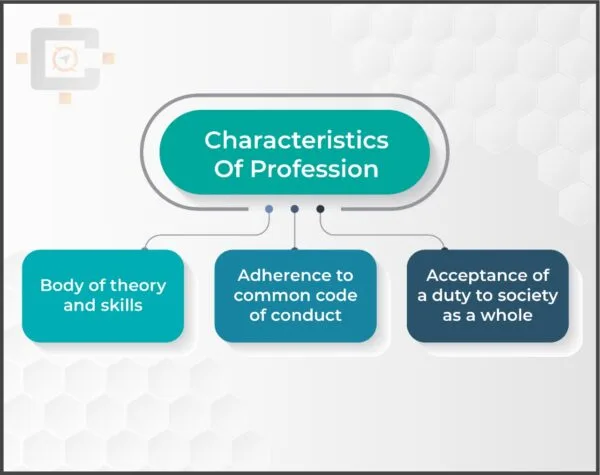
A profession is distinguished by certain essential and defining characteristics:
Body of theory and skills:
– Technical skills (such as auditing or accounting standards)
– Acquired by training and education
– An examination system which ensures accountants obtain the knowledge required to act responsibly within their profession
– Maintained by continuing professional development (CPD).
Adherence to common code of values and conduct:
– Established by administrating body
– Maintains an objective outlook
– Ethical standards applicable to all members
Acceptance of a duty to society as a whole:
– Professions can be trusted to act in the public interest
– In return members are granted a qualification and usage of a title (such as ACCA).
Professionalism:
Definition:
Taking action to support the public interest
– Members are seen to be acting professionally, or literally having professionalism.
– Professionalism may also be interpreted more as a state of mind, while the profession provides the rules that members of that profession must follow.
– Professional behaviour imposes an obligation on members to comply with relevant laws and regulations and avoid any action that may bring discredit to the profession.
– Professional behaviour will mean complying with the ethical standards laid down by the professional body.
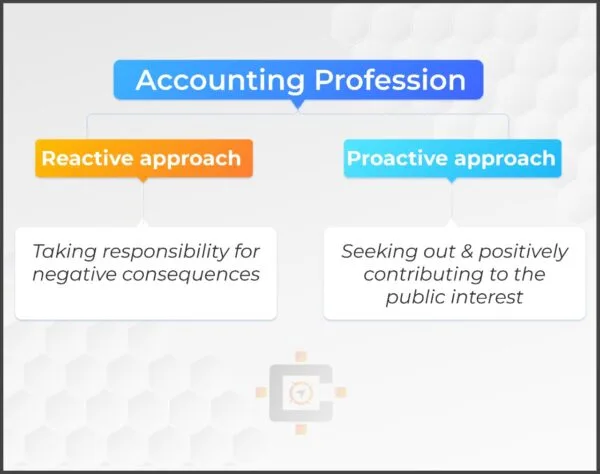
A reactive approach
Taking responsibility for any negative consequences of accounting practice and, where appropriate, amending those practices to remove those consequences.
A proactive approach
Seeking out and positively contributing to the public interest.
The accounting profession:
Over time, the profession appears to be taking more of a proactive, than a reactive, approach.
This lesson is waiting for its secure Vimeo video.


